GLOW
Season 1
Season 1 is set in 1985 Los Angeles, a city drowning in failed auditions. Ruth Wilder (Alison Brie), a theatre-trained actress in her thirties who can't land anything but commercials, stumbles into an open casting call run by B-movie director Sam Sylvia (Marc Maron) — a washed-up exploitation filmmaker attempting an experiment modelled on the real 1980s phenomenon Gorgeous Ladies of Wrestling. A dozen desperate women with wildly different backgrounds show up to be trained as wrestlers: Carmen (Britney Young), a shy colossus from a famous wrestling dynasty; Sheila (Gayle Rankin), who never breaks character as a she-wolf; Jenny (Ellen Wong), Arthie (Sunita Mani), Melrose (Jackie Tohn), Rhonda (Kate Nash), Tammé (Kia Stevens) and Cherry Bang (Sydelle Noel), a stuntwoman whose film career dried up when the seventies ended.
The fragile ensemble detonates when it emerges that Ruth recently slept with Mark (Rich Sommer), the husband of her estranged best friend Debbie Eagan (Betty Gilpin) — a soap opera star and new mother whose life looks perfect and feels like a cage. Debbie storms into the gym not to join the show but to confront Ruth, and stays. Their real-life war becomes the engine of the fictional one: Ruth plays villain Zoya the Destroya, Debbie plays all-American hero Liberty Belle, and every scripted slam carries genuine rage.
Funding arrives courtesy of Bash Howard (Chris Lowell), a wealthy heir financing his mother's nightmares, and after a public brawl between Ruth and Debbie spills outside a television studio, local station K-DTV picks the show up. The season closes with the first episode taped live: Zoya versus Liberty Belle, two best friends beating the hell out of each other in front of an audience — and loving it.
Season 2
Season 2 follows the show-within-the-show as it lurches onto air. Broadcasting weekly on K-DTV means budgets, sexist executives, cheap sets and the dawning awareness that nobody is paid what they are worth. The women begin pushing back collectively — organising, comparing cheques, threatening to walk — years before #MeToo gives their fight a vocabulary.
Ruth, hungry for control over stories instead of just spots in them, directs an episode and discovers a talent nobody, least of all herself, expected. Sam quietly names her co-director at the season's end. Justine (Britt Baron), the sardonic young wrestler, is revealed to be Sam's daughter, forcing him into an unwanted education in fatherhood. Debbie, chafing at life as somebody's ex-wife, leans into producing and begins the transformation from leading lady to power player.
The season's most devastating beat is accidental: high on cocaine, Debbie breaks Ruth's ankle in the ring — a fusion of friendship, rivalry and self-destruction neither can untangle. As ratings falter, the network cancels GLOW, and the future looks dead until Bash brokers an improbable salvage deal: the whole operation will relocate to Las Vegas as a live stage show. The finale sends the women boarding a bus into the desert — a family, still broke, still furious, still together.
Season 3
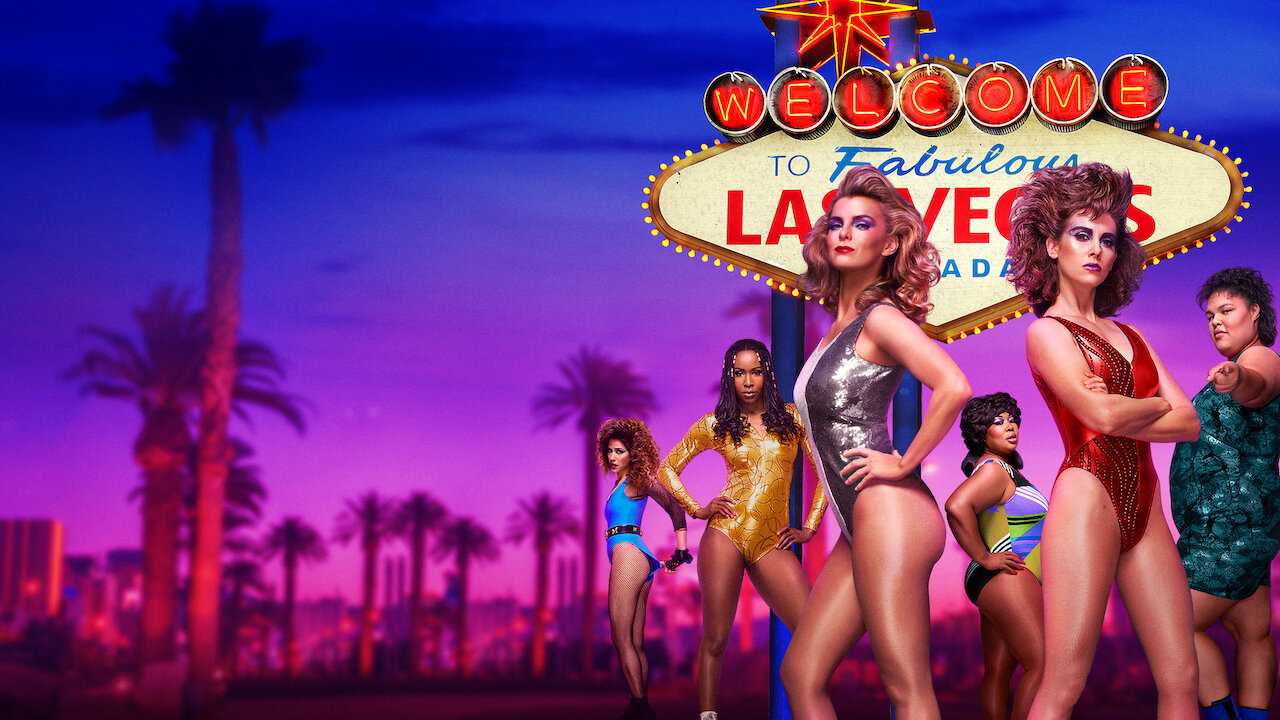
Season 3 is set in 1986, performing nightly at the Fan-Tan Hotel and Casino under entertainment director Sandy Devereaux St. Clair (Geena Davis). Vegas pays steadily, which is its own kind of trap: the women are celebrities without fame, doing nine shows a week in an Asian-themed casino that grotesquely magnifies the stereotypes some of them wrestle under.
Away from the ring, identities shift. Arthie falls for Yolanda (Shakira Barrera) and comes out to the cast. Bash, after a threesome with Rhonda and a male escort, confronts the truth about his sexuality — and chooses to stay closeted, terrified of losing everything. Rhonda, now his wife on paper, understands more than he says. Debbie, frustrated as a producer without power, steals her boyfriend Tex's planned acquisition of a television network using Bash's money and installs herself as its president. Sam, having confessed his feelings to Ruth and been turned away, leaves for Los Angeles to help Justine turn her screenplay into a film.
The finale, "A Very GLOW Christmas", ends the Vegas run. The cast disperses for the holidays: Carmen quits wrestling-adjacent life to go on the road with her brothers; Cherry and Keith reconcile; the Bangs consider adoption. At the airport, Debbie chases Ruth down with an offer — direct the new wrestling show for her network, build "an Eden where we run the show". Ruth refuses: "I don't want an off-ramp. I never even got on the road." She boards her flight to Omaha, leaving Debbie stunned on the tarmac — best friends once again at war over what a woman is allowed to want.
The Ending
Eight Months Later
The soundstage in Van Nuys smells like fresh paint and burnt coffee. A banner above the door reads FABULOUS LADIES OF WRESTLING — DEBBIE EAGAN, PRESIDENT. Nobody has told Debbie that the banner is slightly crooked, and nobody will, because everyone who works here has seen what happens to people who bring her bad news about her show.
Ruth stands at the craft services table, holding a script with her own handwriting all over it. She came back to Los Angeles in February, the way she always does. She auditioned for everything. She booked one line on a sitcom and got cut before air. In March she drove past the studio gate, saw the banner through the fence, and sat in her car for forty minutes deciding whether she was surrendering.
She wasn't. That's the thing she finally understands, standing here in a building where her name is on every call sheet. She didn't come back for the ring. She came back because for the first time in her life, someone offered her the whole job — and the whole job turned out to be writing, directing, and occasionally body-slamming your best friend on national television.
"You're blocking the coffee," Debbie says, sweeping past with two phones and a clipboard.
"Good morning to you too."
"Don't be precious. The premiere is in six hours."
The Rehearsal
They come back one by one, the way families do. Carmen arrives first, leaner from the road, with new holds she learned from her brothers and no apology for having left. Sheila auditions in a monologue, no wolf ears, and gets cast as herself — which turns out to be harder and better than anything else she has played. Jenny runs wardrobe under her own credited name, invoiced properly this time. Arthie and Yolanda share a tag-team belt and an apartment. Cherry directs the second unit like she was born doing it.
Even Sam shows up, three days late, ostensibly to consult. Justine's movie premiered at a festival in January; he pretends this is nothing, then tells Ruth about it twice.
In the empty ring at midnight, Ruth and Debbie run the finish of tomorrow's main event again and again until their bodies move without argument. Zoya versus Liberty Belle, one last time — except they wrote it together this time, every fall and reversal, and neither of them can tell anymore where the anger ends and the choreography begins. Maybe that was always the answer. Not forgiveness. Choreography.
The Premiere
The audience is small and loud and perfect. Zoya and Liberty Belle destroy each other for eleven minutes — chairs, turnbuckles, a suplex that makes the front row gasp — and then, on the count of nine, both women rise at once. The referee doesn't know what to do. There is nothing in the rulebook for two opponents who refuse to fall.
Debbie pulls Ruth up by the wrist and raises her hand. Ruth grabs Debbie's arm and raises hers back. The crowd noise swells into something less like applause and more like relief.
At ringside, Bash watches with Rhonda's hand in his, and he lets her keep it there where people can see. By the curtain, Sam applauds the way he does everything — like it costs him money.
The Road
After the arena empties, Ruth sits on the ring apron in the dark, still in costume, sweat cooling. Debbie drops down beside her.
"I have a note," Debbie says. "For next week's show."
"We haven't even aired this one."
"I'm building something that doesn't need you to stop being an actress," Debbie says. "Direct four episodes a year. Star in the other forty. Audition on your days off if it keeps you sane. I'm not offering you an off-ramp anymore. I'm offering you a road with your name on the sign."
Ruth looks out at the empty seats — the ring lit like an island, the dark beyond it full of everything that never happened to her. Every audition. Every callback that wasn't. She spent ten years waiting for someone to hand her a career.
Nobody handed her anything. She built this. They did.
"Okay," Ruth says. "But I get final draft on the finishes."
"You get final draft on nothing."
They sit there anyway, shoulder to shoulder on the apron, two women who ran out of people to fight and finally ran out of reasons to fight each other. Somewhere behind them, a stagehand kills the last light over the ring.
The show goes on. This time, they own it.
This is not an official ending. It is a fan-written imagining of how GLOW could have concluded.
Frequently Asked Questions
Was GLOW cancelled?
Yes. On October 5, 2020, Netflix cancelled GLOW after three seasons by reversing its earlier decision to renew the series for a fourth and final season. The reversal was reported by Deadline, which noted the renewal had been ordered in September 2019 under the tagline "The Final Match". Filming had begun on Season 4 but was shut down in March 2020 during the COVID-19 pandemic, roughly three weeks into production, with one completed episode and a second partially filmed.
Why was GLOW cancelled?
Netflix cited COVID-19 production challenges. Wrestling requires sustained physical contact, heavy breathing and exertion — exactly what pandemic protocols forbade — and the show's large ensemble of roughly twenty series regulars made safe filming prohibitively expensive. According to Deadline, these added COVID-related costs pushed the budget of an already high-end series too high for Netflix to proceed. The cancellation came on the same day Netflix also cancelled Teenage Bounty Hunters (read its imagined ending). Co-creators Liz Flahive and Carly Mensch confirmed the news in a statement to Deadline, writing: "It still sucks that we don't get to see these 15 women in a frame together again." Marc Maron later publicly pitched Netflix a two-hour film to wrap up the story; no film was made.
How many seasons of GLOW are there?
GLOW has three seasons, each with ten episodes (30 total). Season 1 premiered on Netflix on June 23, 2017, Season 2 arrived on June 29, 2018, and Season 3 was released on August 9, 2019. Over its run the series earned 15 Emmy nominations and three wins, including two for co-star Betty Gilpin's supporting performance.
Does GLOW have a proper ending?
No. Season 3 ends on a deliberate cliffhanger: Ruth rejects Debbie's offer to direct her new network wrestling show and boards a flight home, leaving the central friendship fractured and every character's future unresolved. The creators had planned a fourth and final season — heavier on wrestling, set after the Vegas run, following Debbie's network and Ruth's path back to Los Angeles — before the reversal. As a result, GLOW is one of several Netflix series, alongside Mindhunter, whose story was cut short mid-arc rather than concluded.
What is GLOW about?
GLOW (an acronym for Gorgeous Ladies of Wrestling) is a Netflix comedy-drama inspired by the real 1980s syndicated women's wrestling television programme of the same name. It follows Ruth Wilder, a struggling actress in 1980s Los Angeles who joins a female wrestling show run by a down-and-out director, reuniting — explosively — with her estranged best friend Debbie Eagan. Beneath the spandex and choreographed chaos, the series explores female friendship, ambition, pay inequality, sexuality and reinvention across three seasons set in 1985 and 1986.